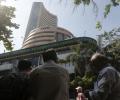
Leading stock exchange BSE on Monday cautioned investors to remain vigilant against deepfake video of its CEO giving stock recommendations and investment advice on social media platforms. The exchange emphasised that the video is unauthorised and fraudulent, and its officials are not permitted to provide any stock tips.

Indian investors have seen their wealth erode by a staggering Rs 16.77 lakh crore over four trading sessions, as the markets faced deep losses driven by elevated crude oil prices, geopolitical tensions, persistent foreign fund outflows, and a record-low rupee.

Indian benchmark equity indices, Sensex and Nifty, opened higher, tracking positive global trends and easing crude oil prices, fueled by hopes of a swift resolution to the West Asia conflict. Track Nifty 50 and BSE Sensex performance and key global triggers.

Indian benchmark equity indices Sensex and Nifty surged in early trade, driven by a sharp correction in crude oil prices below USD 100 per barrel and a rally in global markets, fuelled by improving sentiment surrounding US-Iran negotiations.

Indian equity markets experienced a significant decline in early trade, with the BSE Sensex and NSE Nifty dropping, as escalating geopolitical tensions in West Asia and a surge in global oil prices dampened investor sentiment. Track Sensex, Nifty50 movement and key market drivers for May 8, 2026.

Indian equity benchmark indices experienced a significant drop in early trade, with the BSE Sensex falling over 525 points and the NSE Nifty down more than 164 points, primarily due to rising crude oil prices and ongoing uncertainty surrounding the US-Iran conflict.

Indian stock markets rallied in early trade after US President Donald Trump announced a halt to planned military strikes on Iran, citing requests from Gulf leaders and ongoing "very big discussions" that could lead to a deal. This de-escalation, coupled with foreign fund inflows and gains in IT and Adani group stocks, contributed to the positive market sentiment. Track Sensex and Nifty on May 19, 2026.

Indian stock markets are set to be influenced by developments in US-Iran negotiations, crude oil prices, and foreign investor activity in the upcoming holiday-shortened week, according to market analysts.

Indian benchmark equity indices, the BSE Sensex and NSE Nifty, experienced a significant drop in early trade due to elevated oil prices, weak global market trends, and renewed fears of military operations in the Middle East following US President Donald Trump's statements regarding Iran. Track Sensex, Nifty on May 20.

Small- and midcap stocks have delivered their biggest monthly rally in 12 years, but rising oil prices and global tensions could make the road ahead volatile.

The combined market valuation of four of India's top-10 most valued firms, including State Bank of India, Bharti Airtel, Tata Consultancy Services, and Larsen & Toubro, eroded by Rs 1 lakh crore last week amidst a volatile and range-bound equity market.

Indian benchmark indices Sensex and Nifty experienced a significant slump in early trade, mirroring weak global trends, as escalating tensions in West Asia, particularly a drone attack on the UAE's Barakah nuclear facility, pushed crude oil prices higher. Track Sensex, Nifty50 movement and key market drivers for May 18, 2026.

Analysts predict that the ongoing US-Iran conflict, fluctuations in crude oil prices, and foreign institutional investor (FII) flows will be the primary factors influencing Dalal Street this week, with inflation concerns adding to investor anxiety.

HCL Technologies remains under pressure after missing Q4 expectations and issuing cautious FY27 guidance. Analysts highlight weak margins, soft demand, and muted growth outlook.

Indian benchmark indices, Sensex and Nifty, ended lower in choppy trade, with the Sensex declining 114 points, as investors reacted to unabated foreign fund outflows and rising geopolitical uncertainties.
Indian benchmark indices Sensex and Nifty experienced declines due to a sharp rally in crude oil prices, continuous foreign fund outflows, and geopolitical uncertainties. Regulatory developments in the banking sector, particularly the implementation of the Expected Credit Loss (ECL) framework, also contributed to the selling pressure.
Indian benchmark indices Sensex and Nifty experienced volatile trade, declining in early deals before fluctuating, as investors reacted to unabated foreign fund outflows and rising geopolitical uncertainties, particularly in West Asia.

Indian stock markets are expected to remain highly sensitive to geopolitical developments, particularly the US-Iran situation, and crude oil prices this week, with analysts also highlighting the influence of the rupee-dollar trend, foreign investor activity, and upcoming inflation data.

Prudential plc has announced its acquisition of a 75 per cent stake in Bharti Life Insurance for approximately 3,500 crore, a strategic move to secure majority ownership in the Indian life insurance market. This acquisition necessitates Prudential reducing its holding in ICICI Prudential Life Insurance to below 10 per cent.
Indian benchmark indices Sensex and Nifty experienced a significant tumble in early trade, driven by surging global oil prices, continuous outflows by Foreign Institutional Investors (FIIs), and persistent geopolitical uncertainties, particularly in West Asia.

Indian equity benchmark indices Sensex and Nifty rebounded in early trade, driven by buying in blue-chip stocks and a positive trend in Asian markets, with domestic institutional investors providing crucial support.
Indian equities on Dalal Street saw volatility as global market trends and weak rupee impacted investor sentiment. Track Sensex, Nifty50 movement and key market drivers for May 5, 2026.

Kiran Mazumdar-Shaw names niece Claire Mazumdar as successor at Biocon. Explore the leadership transition, strategy, and future plans.

Indian benchmark indices, Sensex and Nifty, saw a significant rebound in early trade, driven by a decline in crude oil prices. This drop followed US President Donald Trump's announcement of progress in negotiations with Iran towards an agreement to end the war, leading to a temporary pause in 'Project Freedom' to escort ships through the Strait of Hormuz. Track Nifty 50 and BSE Sensex performance and key global triggers.

Indian benchmark equity indices, Sensex and Nifty, snapped a three-day rally, tumbling nearly 1 per cent due to heavy selling in IT stocks, a jump in crude oil prices, foreign fund outflows, and fears of prolonged instability in West Asia.
Indian stock markets extended their gains for a third consecutive day, with the Sensex climbing 753 points and the Nifty closing above 24,550, driven by a drop in crude oil prices and optimism surrounding potential peace talks between Iran and the US.
Indian benchmark indices, Sensex and Nifty, opened lower on Tuesday, driven by a surge in global crude oil prices and continued outflows by Foreign Institutional Investors (FIIs), reflecting fragile market sentiment influenced by external factors.
Infosys Q4 results beat estimates, but weak FY27 guidance triggers cautious brokerage outlook and target price cuts. Should investors worry?

Aviation stocks experienced a significant surge following the announcement of a two-week ceasefire between the US and Iran, which led to a sharp decline in crude oil prices. This development has positively impacted stock markets and the broader economic outlook for India.
Indian benchmark stock indices Sensex and Nifty rebounded nearly 1 per cent, snapping a three-day decline, driven by rallies in Reliance Industries and Sun Pharma, alongside positive global market trends and easing geopolitical tensions.

Indian investors have seen their wealth erode by a staggering Rs 48.29 lakh crore since the West Asia war began on February 28, leading to a significant downturn in the BSE Sensex and NSE Nifty, driven by geopolitical tensions and rising crude oil prices.
Indian equity benchmark indices Sensex and Nifty tumbled over 1 per cent for the third consecutive day, driven by a sharp rally in crude oil prices, massive selling in IT stocks, and unabated foreign fund outflows amid ongoing geopolitical tensions in the Middle East.

IT major Wipro reported a consolidated net profit of Rs 3,501.8 crore for March quarter FY26, a 1.89 per cent decrease from the previous year, amidst a challenging macroeconomic environment. The company also announced a mega Rs 15,000 crore share repurchase programme.

Infosys shares experienced a significant drop, hitting a 52-week low, after the company announced its Q4FY26 results and provided a modest revenue growth guidance of 1.5-3.5 per cent in constant currency for FY27, falling below market expectations and raising concerns about AI-led deflation and margin pressures.
Indian equities on Dalal Street saw volatility as global market trends and oil price hike impacted investor sentiment. Track Sensex, Nifty50 movement and key market drivers for Apr 23, 2026.

Infosys reported a 20.8 per cent increase in consolidated net profit to 8,501 crore for the January-March quarter of FY26, with revenue from operations rising 13.4 per cent to 46,402 crore. The IT major has guided for a 1.5 to 3.5 per cent revenue growth for FY27, driven by momentum in financial services, utilities, and emerging AI services, despite a volatile macroeconomic environment and geopolitical risks.
Indian equity benchmark indices Sensex and Nifty rallied in early trade, driven by reports of a second round of talks between the US and Iran, which are fostering hopes for a resolution to the West Asia conflict, coupled with Brent crude oil prices trading below the USD 100 per barrel mark.

Indian markets on Dalal Street rallied sharply as easing tensions in the US-Iran conflict and stable oil prices boosted sentiment. Track Nifty 50 and BSE Sensex performance and key global triggers.

Indian markets on Dalal Street rallied sharply as easing tensions in the US-Iran conflict and stable oil prices boosted sentiment. Track Nifty50 and BSE Sensex performance and key global triggers.

IT major HCLTech reported a 4.20 per cent year-on-year rise in consolidated net profit to Rs 4,488 crore for the January-March quarter of FY26, but projected a modest 1-4 per cent revenue growth for FY27, citing market volatility and reduced discretionary spending.
 © 2026 Rediff.com - Advertise with us - Disclaimer - Privacy Policy - Sitemap - Feedback - About us - Terms of use - Grievances